
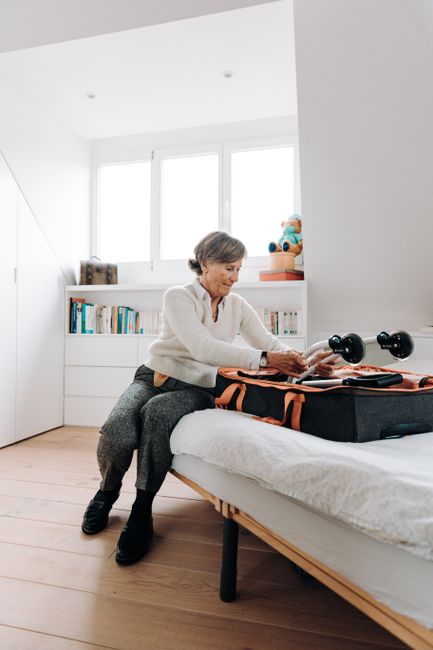
Moving to assisted living often becomes easier when household belongings are reviewed in stages rather than handled all at once. Downsizing is not simply about getting rid of possessions; it is about deciding what supports daily life, preserves meaningful memories, and fits safely into a smaller living space.
How early should downsizing begin?
Begin several weeks or months before the move whenever possible. A slower process gives residents time to make thoughtful decisions without feeling rushed by packing deadlines.
Starting early also helps identify items that may need repair, donation, sale, recycling, or special handling. Families can work through one room, closet, or category at a time instead of opening every box and cabinet at once.
A practical starting point is to create four groups:
- Keep for the new residence
- Give to family or friends
- Donate or sell
- Discard or recycle
A fifth group can be useful for items that need more time or discussion. Setting those belongings aside prevents one difficult decision from stopping the entire process.
What should be measured before choosing what to keep?
Measure the new room, apartment, or suite before moving furniture. Do not rely only on photographs or general floor plans. Record the length and width of the room, door openings, closet space, bathroom layout, and locations of windows, outlets, and heating or cooling equipment.
Large furniture may not fit even if the room appears spacious. Common items that require careful measurement include:
- Beds and bedroom furniture
- Recliners and upholstered chairs
- Dressers and cabinets
- Dining tables
- Lamps and televisions
- Mobility equipment
- Storage containers
A simple paper floor plan can help determine what will fit. Leave clear walking paths, especially around the bed, bathroom, closet, and entrance. Furniture that blocks a doorway, narrows a route, or creates a tripping hazard should not be brought along.
Residents in Lock Haven may also need to think about seasonal clothing and outdoor equipment. Cold-weather coats, boots, gloves, and heavier bedding may be necessary, but several versions of the same item may not be.
Which belongings deserve priority?
The most useful belongings are usually those that support comfort, identity, routine, and safety. A smaller home does not need to feel unfamiliar.
Prioritize items such as:
- A favorite chair that fits safely
- A familiar blanket or quilt
- Several photographs
- A small collection of books
- A clock that is easy to read
- Personal artwork
- A radio, music player, or other familiar source of entertainment
- Clothing that is comfortable and regularly worn
- Toiletries and grooming items used every day
Think about how the room will be used rather than trying to recreate the previous home. A few well-chosen objects may provide more comfort than crowded shelves filled with items that are rarely touched.
It can help to select one or two visible memory displays instead of bringing every photograph, holiday decoration, or collectible. Rotating seasonal items later can keep the room personal without creating clutter.
How can family members handle sentimental belongings?
Sentimental decisions are often the hardest part of downsizing. Family members should avoid treating the process as a quick cleanup or assuming that older belongings have little value.
Ask the resident to explain the meaning behind important objects. A worn table, sewing basket, recipe box, or set of dishes may carry memories that are not obvious to others.
For items that cannot move to the new residence, consider:
- Taking clear photographs
- Recording a short story about the item
- Dividing belongings among family members
- Preserving a small portion of a larger collection
- Creating a memory box
- Digitizing letters, recipes, or photographs
A memory box can hold a manageable number of meaningful items, such as family photographs, military papers, handwritten recipes, greeting cards, or small keepsakes. The purpose is not to preserve everything. It is to protect the parts of a personal history that matter most.
What should happen to medications, paperwork, and valuables?
Important documents should be separated from ordinary household goods. Keep them together in a clearly labeled folder or secure container during packing and transportation.
Documents may include:
- Identification papers
- Insurance information
- Medication lists
- Advance directives
- Property and financial records
- Banking information
- Legal documents
- Emergency contacts
Do not pack medications into unlabeled boxes or place them in a moving truck without clear instructions. Prescription medicines, hearing devices, glasses, dentures, and mobility aids should stay with the resident or responsible family member.
Jewelry, cash, small electronics, and irreplaceable documents also deserve separate handling. A written inventory of valuables can reduce confusion during a move.
What clothing is really needed?
A smaller wardrobe is easier to organize and maintain. Choose comfortable clothing that works for everyday activities, indoor temperatures, appointments, social events, and changing seasons.
Labeling clothing may be helpful, particularly when laundry is handled outside the resident’s room. Use durable labels or another identification method that will remain readable after repeated washing.
Pack enough socks, undergarments, sleepwear, comfortable shoes, and everyday outfits to avoid frequent shortages. Include layers rather than relying on a few heavy garments. Indoor temperatures may vary, and lightweight sweaters or cardigans can be useful throughout the year.
Remove clothing that is uncomfortable, difficult to fasten, rarely worn, or unsuitable for current mobility needs. Clothing should support independence rather than create extra frustration.
How can downsizing be safer during winter?
Winter conditions can make moving day more complicated. Snow, ice, wet floors, heavy coats, and limited daylight can increase fall risks around entrances and walkways.
For a move during colder months:
- Keep essential medications and warm clothing accessible
- Use sturdy footwear with good traction
- Avoid carrying boxes while walking on icy surfaces
- Keep pathways free of bags and loose packing materials
- Protect important papers from moisture
- Pack a small overnight bag separately
- Arrange transportation that allows enough time and safe loading
Even outside winter, rain and muddy ground can create similar problems. Moving supplies should not be left where they obstruct hallways, stairs, or accessible entrances.
What should be done with items that cannot be kept?
Do not wait until the last day to decide how belongings will leave the home. Set deadlines for family selections, donations, recycling, and disposal.
Some items require special care. Paint, cleaning chemicals, propane containers, batteries, old electronics, and certain medical equipment may not belong in ordinary household trash. Follow local disposal rules and keep hazardous materials away from children and pets during the transition.
Large furniture can also take longer to remove than expected. If family members are taking items, write down who is receiving each piece and when it will be collected. This avoids uncertainty and reduces the chance that important belongings are accidentally discarded.
How can residents stay involved in the process?
The resident should remain involved as much as health and energy allow. Downsizing can affect independence and personal identity, so decisions should not be made entirely by others unless there is a clear legal or safety reason.
Work in short sessions, especially if sorting causes fatigue or emotional distress. One drawer, shelf, or category may be enough for a day. Take breaks and allow time to revisit difficult choices.
A useful question is: “Will this item support daily life, comfort, memory, or safety in the new residence?” If the answer is no, the item may be better preserved through a photograph, shared with someone who will use it, or released without guilt.
The goal is a manageable living space that feels familiar, safe, and personal—not a perfect record of everything owned over a lifetime.
